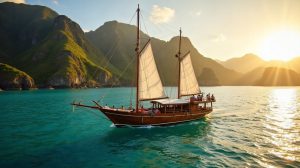
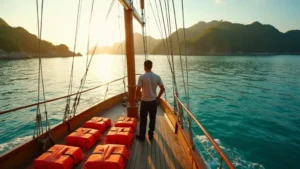
The cabin you choose shapes your Komodo liveaboard experience more than almost any other booking decision: shared cabins keep 2027 open-trip prices low, private cabins add comfort at a mid-range premium, and master cabins with sea-view windows and en-suite bathrooms define the luxury tier. This guide walks through the main Komodo liveaboard cabin types — shared, private, lower-deck, and master — so you can match a cabin to your budget, your travel style, and your tolerance for the movement of the sea.
Our cabin pricing guide covers costs in detail; this article covers the other half of the decision — what each cabin feels like on board, and what to check before you pay a deposit.
Shared vs Private Cabins on Open-Trip Cruises
On a Komodo open trip cruise, you book per person on a fixed departure and share the boat with other travelers — typically anywhere from 8 to 22 guests depending on the vessel. Whether you get a shared cabin or a private one depends almost entirely on the tier of boat you book.
On budget open trips, expect shared cabins: bunk-style rooms where solo travelers are paired with other guests. Meals, drinking water, snorkeling gear, and crew are included at every tier — privacy is the trade-off that keeps prices low. On mid-range and luxury shared phinisi, cabins are usually sold as private doubles or twins: you share the boat and itinerary, but not your room. If a private cabin matters to you, confirm in writing that your rate is for a private cabin, not a berth in a shared one — the phrase “open trip” covers both arrangements.
Master Cabins with Sea Windows vs Lower-Deck Cabins
Most phinisi cabins sit in one of two zones, and brochures rarely explain the difference. Upper-deck and main-deck master cabins offer the views: large sea-facing windows, natural light, and often direct deck access. Lower-deck cabins sit closer to the waterline, usually with small portholes or no window at all.
Here is the trade-off. A boat pivots around a point low in its hull, so cabins higher above the waterline swing through a wider arc — motion from swell is more noticeable in an upper-deck master cabin, while a lower-deck cabin stays comparatively stable. On an overnight Komodo cruise this matters less than travelers fear, since boats anchor in sheltered bays most nights. But if you are prone to seasickness, a lower-deck cabin near the middle of the boat is the steadier choice for daytime crossings. If waking up to a sea view is the whole point, take the master cabin and pack motion-sickness tablets as insurance.
En-Suite Bathrooms: The Real Luxury Marker
If one test separates budget boats from premium ones, it is the bathroom. Shared bathrooms — two or three toilets and showers serving the whole guest list — are standard on budget open trips. En-suite cabins, with the bathroom inside your own room, are a consistent inclusion of the premium tier, alongside upgraded dining and better-appointed decks.
On a luxury Komodo cruise, every cabin is typically en-suite as a baseline, with hot-water showers and proper ventilation. In between, some mid-range phinisi mix cabin types on one boat — two en-suite doubles plus two cabins sharing a bathroom, for example — which means two travelers on the same departure can have very different trips. Always ask which specific cabin you are being sold, not just which boat.
AC and Power Outlets: Check Before You Book
Two small details cause an outsized share of on-board disappointment, and both are worth a direct question before you confirm.
Air conditioning. Most modern phinisi advertise AC cabins, but policies differ: some boats run AC only at night or when the generator is on, to save fuel. In the dry-season heat around Komodo, an AC unit that runs on a schedule is a very different product from one that runs on demand. Ask when the AC operates, not just whether it exists.
Power outlets. Confirm how many outlets are in the cabin and whether they are live around the clock — on some boats, charging happens at shared stations in the saloon during generator hours. Indonesian sockets are the two-pin European type (220V), so bring an adapter for UK, US, or Australian plugs. Photographers carrying drone and camera batteries should raise this specifically.
Komodo Liveaboard Cabin Types by Price Tier
The table below lines cabin standards up against indicative 2026–2027 price bands for the most-booked 3D2N format. Treat every figure as a starting point — rates move with season, boat, and cabin position, and exact quotes are on request.
| Tier | Typical cabin setup | Bathroom | Indicative price (3D2N) |
|---|---|---|---|
| Budget open trip | Shared or bunk-style cabins, fan or scheduled AC | Shared | From ~USD 150–300 per person |
| Mid-range open trip | Private double or twin cabins, AC | Shared or en-suite (varies by boat) | ~USD 280–450 per person |
| Luxury shared phinisi | Private en-suite cabins, some with sea windows | En-suite | ~USD 450–850 per person |
| Private phinisi charter | Whole boat: 5–7+ cabins, master cabin on deck | En-suite (standard and above) | From ~USD 1,800–8,000 per night, per boat |
| Luxury yacht charter | Designer suites, panoramic master cabin | En-suite throughout | From ~USD 3,500–12,000+ per night, per boat |
Komodo National Park entrance and ranger fees are often excluded at every tier and paid separately, so compare quotes like-for-like.
Couples vs Solo Travelers: How to Choose
Couples get the best value from mid-range open trips upward, where private double cabins are standard. If the trip is a honeymoon or anniversary, the master cabin on a luxury shared phinisi — or a small private charter — is the meaningful upgrade: sea windows, an en-suite bathroom, and space to be alone on deck. Ask specifically for the master or main-deck cabin when booking; on many boats it costs only modestly more than a standard double.
Solo travelers face the classic trade-off: a shared cabin on a budget open trip is the cheapest way onto the water and the easiest way to meet people, while a private cabin usually carries a single supplement. If you want privacy without paying for two seats, ask about solo rates on quieter shoulder-season departures. Motion-sensitive travelers should request a lower-deck cabin at booking rather than hoping to swap on board — cabins are usually assigned before departure.
How to Confirm Your Cabin Before Paying
Cabin categories are not standardized between boats, so verify five things in writing before transferring a deposit: cabin name or number, deck position, bathroom type, AC policy, and bed configuration. Established fleets make this easier — the vessels operated by Komodo Luxury, the operator behind our cruise network, publish per-cabin layouts across their deluxe to VVIP classes, so you can see exactly which room you are reserving. Ask for real cabin photos, not stock imagery, and confirm which cabin is blocked for you by name.
Frequently Asked Questions
Do all Komodo liveaboards have private cabins?
No. Budget open trips commonly use shared or bunk-style cabins, while mid-range and luxury boats sell private doubles and twins. The format — open trip or charter — does not tell you the cabin type; the boat’s tier does, so always confirm the specific cabin with your booking.
Is a lower-deck cabin better for seasickness?
Generally yes. Cabins lower in the hull and closer to the boat’s center move through a smaller arc in swell than upper-deck cabins, so they feel more stable. Since Komodo itineraries anchor overnight in sheltered bays, motion is mostly a factor during daytime crossings rather than while you sleep.
What does a master cabin include on a Komodo phinisi?
A master cabin is usually the largest room on board, positioned on the main or upper deck with sea-facing windows, a double bed, and an en-suite bathroom. On premium boats it may add a private terrace or direct deck access. Exact features vary by vessel, so request the cabin plan before booking.
Are en-suite bathrooms standard on Komodo cruises?
Only from the premium tier upward. Budget boats typically use shared bathrooms, mid-range boats vary cabin by cabin, and luxury shared phinisi and private charters generally offer en-suite bathrooms throughout. If an en-suite is essential for you, treat it as a booking condition, not an assumption.
How much more does a private cabin cost than a shared one?
As an indicative spread for a 3D2N trip, shared-cabin budget berths start around USD 150–300 per person, while private-cabin mid-range trips run roughly USD 280–450 per person and luxury en-suite cabins reach USD 450–850 per person. Exact 2027 rates depend on the boat and season and are quoted on request.
Get a Cabin-by-Cabin Quote for 2027
The fastest way to choose well is to compare two or three specific cabins — with photos, deck plans, and dates — rather than boats in the abstract. Send your travel dates, group size, and cabin preference, and our team will reply with matched options and availability. Message us on WhatsApp at wa.me/628113823875 or email [email protected] to start planning your 2027 Komodo liveaboard.