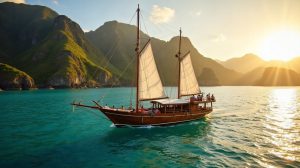
Here is the reassuring truth about seasickness on a Komodo cruise: most of a typical itinerary runs through sheltered, island-flanked water, and the few genuinely exposed crossings are short and predictable. With the right boat, the right cabin, and medication taken before departure rather than after nausea sets in, even motion-sensitive travellers routinely complete a full three-day liveaboard in comfort.
This 2027 guide covers what actually moves the needle — how Komodo National Park’s waters behave, which vessels stay steadiest, where to sleep on board, the medication timing that works, and the natural techniques crews rely on — plus a low-risk strategy: test yourself on a short day trip before committing to nights at sea.
How Rough Is a Komodo Cruise, Really?
Komodo National Park is an archipelago, not open ocean. The classic cruising grounds thread between Padar, Komodo, Rinca, Kelor, and Kanawa islands, and those landmasses act as natural breakwaters. Most legs between highlights — Padar’s viewpoint, the dragon trails, Pink Beach, Taka Makassar — are short hops through channels where swell breaks up long before it reaches your hull, and overnight anchorages sit in protected bays, so your sleeping hours are usually the calmest of the trip.
There are exceptions. The initial run out of Labuan Bajo harbour can feel lively when wind is up, and the channels near Manta Point carry converging currents — the same currents that attract the mantas — which can produce chop even on gentle days. Sea state varies by season, and experienced captains adjust routing when conditions turn. In practice, the “rough” portion of a standard itinerary is measured in minutes, not days.
The Boat You Choose Decides Most of the Battle
If you are prone to motion sickness, vessel selection matters more than any remedy. A traditional two-masted phinisi is a heavy, deep wooden hull that rides swell slowly and gently; a small speedboat sprints at speed and slaps through every piece of chop on the way to Padar. On a breezy day, the comfort gap is enormous.
- Large phinisi (best for sensitive travellers): heavy displacement hulls dampen motion and the decks let you stay midship in fresh air. Shared open-trip phinisi typically carry 8–22 guests; private charters give you the whole vessel.
- Speedboats (fastest, but bounciest): ideal for covering the park in a day, less ideal for queasy stomachs. If you must take one, sit low, central, and toward the stern.
Browse stable, full-displacement options in our Komodo phinisi charter fleet. The vessels are operated and crewed through Komodo Luxury, whose captains sail these channels daily and know which anchorages stay calm in any given week.
Cabin Choice: Book Low and Central
On any boat, motion is smallest near the centre of gravity — low in the hull and midship. A lower-deck cabin close to the waterline moves noticeably less than a panoramic upper-deck suite, which sits further from the pivot point and amplifies every roll. The view is better upstairs; the sleep is better downstairs.
On a shared cruise, ask specifically for a lower-deck, midship cabin. On a private charter, give that cabin to your most motion-sensitive traveller and save the top-deck suite for whoever has iron sea legs. The request costs nothing and is one of the highest-impact decisions you can make.
The Medication Protocol That Actually Works
The most common mistake is waiting until you feel ill. Dimenhydrinate — sold across Indonesia as Antimo and stocked by pharmacies in Labuan Bajo — works as a preventative, not a rescue. Take one dose about an hour before your boat leaves harbour, so it is fully absorbed before you meet the first swell. Once nausea has started, the stomach absorbs medication poorly and you are chasing symptoms you could have prevented.
For a multi-day cruise, follow the dosing interval on the packaging rather than waiting for symptoms to return, particularly before longer crossings. Dimenhydrinate makes many people drowsy — some travellers time their dose so the sleepy window lands during an afternoon sailing leg rather than during dragon trekking.
A brief note: this article shares general traveller experience, not medical advice. If you are pregnant, take other medications, or have a health condition, confirm any seasickness remedy with your doctor or a licensed pharmacist before your trip.
Natural Techniques That Hold Up at Sea
Medication is not the only tool, and several traditional approaches genuinely help — especially in combination.
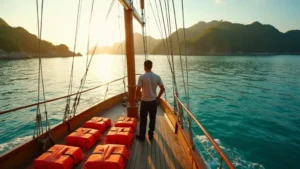
- Horizon gazing: motion sickness is a mismatch between what your inner ear feels and what your eyes see; fixing your gaze on the stable horizon resolves it. Stay on deck, midship, facing forward — and put the phone away, because reading below deck is the fastest route to nausea afloat.
- Ginger: a long-standing sailor’s remedy across Indonesia. Ask the crew for hot ginger tea — most galley teams will happily prepare it — or bring ginger candies to sip and chew through longer crossings.
- Acupressure: the P6 (Nei-Kuan) point sits about three finger-widths below the wrist crease, between the two tendons of your inner forearm. Press firmly for a few minutes, or wear inexpensive acupressure wristbands that hold pressure on the point continuously.
- Ship-smart habits: eat light before departure, stay hydrated, skip heavy alcohol the night before, and keep fresh air on your face rather than sitting in an enclosed cabin.
Test the Waters First: Day Cruise Before Liveaboard
If you have never been on a boat in open water and do not know how your body reacts, do not gamble your whole holiday on a multi-night booking. A one-day Komodo day cruise is the perfect trial: see Padar, the dragons, and Pink Beach in a single outing, then sleep in your Labuan Bajo hotel. Shared day trips start from roughly USD 85 per person (indicative), making the experiment inexpensive.
Handle the day trip comfortably? Then upgrade with confidence to a Komodo overnight cruise — the 3D2N format is the park’s most in-demand itinerary, adding sunrise at Padar, Manta Point, Taka Makassar, and quiet nights at anchor. Shared 3D2N departures on mid-range phinisi run from around USD 330–450 per person (indicative), while private phinisi charters start from approximately USD 1,800 per boat per night (indicative, on request) and let your group set its own pace — including slower, calmer sailing legs.
A Comfort-First 3D2N Routing
A well-planned overnight itinerary keeps exposed water to a minimum: a short hop from Labuan Bajo to Kelor or Kanawa for snorkelling, Padar for sunset via sheltered channels, and a calm-bay anchorage overnight. Day two covers the Komodo or Rinca dragon trek and Pink Beach — both approached in protected water — with Manta Point timed by the captain for the gentlest window. The final morning adds Taka Makassar’s shallow sandbank before an easy return leg. On a private charter, tell your crew comfort is the priority and they will sequence stops around the sea state, not against it.
Frequently Asked Questions
Is seasickness common on a Komodo cruise?
Less common than first-timers fear. The islands shelter the main routes, legs between stops are short, and boats anchor in calm bays overnight. Prepare for the harbour run and current-swept spots like Manta Point, but most guests complete a 3D2N cruise without trouble.
Which boat is best if I get seasick easily?
A large traditional phinisi. Its heavy wooden hull rides swell far more gently than a small speedboat, and its decks let you stay midship in fresh air. Add a lower-deck cabin near the waterline and you have removed the two biggest structural causes of discomfort before you board.
When exactly should I take seasickness medication?
About one hour before the boat leaves harbour — not when you start feeling unwell. Dimenhydrinate (Antimo in Indonesian pharmacies) needs time to absorb, and once nausea begins the stomach absorbs it poorly. On multi-day trips, re-dose per the packaging before longer crossings, and check with a doctor or pharmacist if you have any medical conditions.
Do ginger and acupressure bands really work?
Many travellers and crews swear by them, and they cost almost nothing to try. Hot ginger tea from the galley, ginger candies, and steady pressure on the P6 point of the inner wrist all pair well with the most reliable free technique: eyes on the horizon from the deck, not on a screen below.
Should I book a day trip before a 3D2N liveaboard?
If you are unsure how you handle boats, yes. A single-day cruise lets you experience the park’s waters and still sleep ashore. Goes well? Book the overnight itinerary with confidence. Goes badly? You have lost one day rather than three.
Plan a Smooth-Water Komodo Cruise
The right vessel, cabin, and departure window turn seasickness from a trip-defining worry into a footnote. Tell our team your group’s sensitivity level and we will match you to the steadiest phinisi, reserve the calmest cabins, and time crossings around the gentlest conditions. Message us on WhatsApp at wa.me/628113823875 or email [email protected] — and sail Komodo the comfortable way.