Pink Beach Komodo gets its colour from microscopic red foraminifera and crushed red coral mixed into white sand, and the best snorkeling happens right off the beach on its shallow house reef — ideally in the early morning before day-trip crowds arrive. Pink Beach — locals call it Pantai Merah — appears on virtually every Komodo cruise route from Labuan Bajo, whether you book a one-day speedboat run, a 2D1N liveaboard, or the classic 3D2N highlights loop, alongside Padar Island, the dragon trek, Manta Point, and Taka Makassar. This guide covers the science behind the sand, the reef underwater, and the timing that makes the difference in 2027.
Why Is the Sand at Pink Beach Actually Pink?
The pink hue is not a filter trick. It comes from two natural sources:
- Red foraminifera — single-celled marine organisms with reddish calcium-carbonate shells that live on the surrounding reef and wash ashore to mix with the sand.
- Crushed red coral fragments — pieces of red-pigmented corals broken down by waves over centuries into fine rosy grains.
Mixed with white coral sand, those red particles create a soft blush that intensifies along the wet waterline — the swash zone holds the deepest pink. The colour also shifts with light: pale salmon under a high midday sun, noticeably deeper in early morning or late afternoon.
The House Reef: Snorkeling Straight Off the Sand
What makes Pink Beach unusual among Komodo stops is that the snorkeling starts at the shoreline. There is no tender ride to reach the reef — you wade in, and the coral garden begins within metres of the beach, sloping gently from knee-deep shallows to a terrace at roughly two to eight metres. Expect hard coral bommies and table corals, schools of anthias and fusiliers clouding the reef top, parrotfish grazing the coral — the very fish whose feeding contributes crushed coral to the sand — plus clownfish in anemones and the occasional hawksbill turtle.
Because the entry is shallow and the bay is usually calm, Pink Beach suits mixed-ability groups: confident snorkelers drift along the reef edge while beginners and children stay in the sandy shallows. Currents are gentle compared with sites like Manta Point, but always follow your crew’s briefing — conditions change with the tide.
Quiet vs Crowded: When to Snorkel Pink Beach
Timing determines whether you share the beach with a handful of boats or a flotilla:
Early morning (roughly 7–9 AM) — the overnight-cruise advantage
Boats that anchored overnight nearby — 2D1N and 3D2N liveaboards — reach Pink Beach before the day fleet arrives from Labuan Bajo. In this window you often get a near-empty beach, glassy water, and the best visibility of the day. This is the strongest argument for an overnight cruise over a day trip.
Midday (roughly 10 AM–2 PM) — peak day-trip traffic
Speedboats on the one-day circuit typically hit Pink Beach mid-day, between the dragon trek and Manta Point. Expect several boats offshore and a busy waterline in high season (July–August and year-end holidays). The snorkeling is still good, but empty-beach photos are harder to come by.
Late afternoon — the second quiet window
Once day boats turn back, overnight vessels sometimes return for a golden-hour stop — flattering light, though visibility peaks in the morning.
If your priority is Pink Beach at its quietest, a shared open trip cruise with an overnight on board is the practical route: you sleep near the park and wake up ahead of the crowds, at a per-person price well below a private charter.
Snorkeling Gear Is Included — You Do Not Need to Bring Your Own
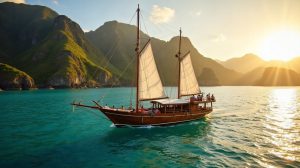
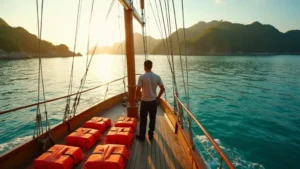
On the 2026 open-trip market standard, snorkeling equipment is part of the published inclusions: mask, snorkel, and fins are provided on board, along with meals, drinking water, tea and coffee, cabin accommodation, and a local guide and crew. The same applies to private phinisi charters, where higher-tier boats add kayaks or stand-up paddleboards.
So pack light — a personal mask is the one item worth bringing if you are particular about fit. To go beyond the house reef, see the broader snorkeling programme run by Komodo Luxury, the operator whose phinisi fleet serves these routes. One cost to budget separately in either format: park entrance and ranger fees are typically excluded and paid on top.
Day Trip or Overnight: Which Way to Reach Pink Beach?
Both formats include Pink Beach; they differ in when you arrive and how long you stay. All prices are indicative 2026 rates and vary by season and boat tier.
- 1-day trip — a speedboat circuit combining Padar, the dragon trek, Pink Beach, and often Manta Point and Taka Makassar. Open-trip seats run roughly USD 85–160 per person; private speedboats from around USD 650–1,600 per boat. You reach Pink Beach at peak hours for about 45–60 minutes. See the full routing on our Komodo day cruise page.
- 2D1N liveaboard — Kelor or Kanawa and Padar on day one, then the dragon trek, Pink Beach, and Manta Point on day two. Open-trip pricing from about USD 220–400 per person, with a realistic shot at a morning Pink Beach slot.
- 3D2N liveaboard — the most in-demand format, covering the full highlights loop at a relaxed pace. Shared cabins from about USD 150–300 (budget) to USD 450–850 per person (luxury shared phinisi); private phinisi from around USD 1,800–2,400 per night, premium vessels on request.
The rule of thumb: a day trip ticks the box; sleeping on the water gets you the morning slot when the beach is at its best.
Drone and Photography Tips at Pink Beach
A few points help you come home with the shot:
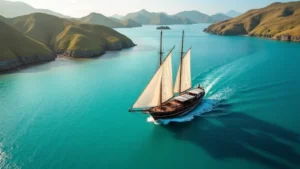
- Shoot the contrast from above. The pink reads most strongly from elevation, where blush sand, turquoise shallows, and green hills stack into one frame. If you fly a drone, launch from the boat or a clear patch of sand, keep away from other visitors, and ask your guide first — rangers can restrict flying near wildlife areas.
- Use the wet sand. The swash zone holds the deepest colour; time frames just after a wave retreats.
- Morning light wins twice. Softer light deepens the pink, and visibility is best before crowds arrive.
- Polarise for the water. A polarising filter, or angling your phone away from glare, makes the reef visible from the surface.
Conservation: Please Leave the Pink Sand Where It Is
Pink Beach only stays pink because the foraminifera and red corals offshore keep supplying it. Taking sand as a souvenir is prohibited in Komodo National Park, and rangers do check bags — thousands of visitors each taking “just a little” would strip the colour everyone comes to see.
The same care applies underwater: do not stand on or touch coral, keep fins off the reef in the shallows, use reef-safe sunscreen, and carry out everything you bring ashore. A healthy house reef is what makes Pink Beach a snorkeling stop rather than just a photo stop.
Frequently Asked Questions
Why is the sand at Pink Beach pink?
The colour comes from red foraminifera — tiny marine organisms with reddish shells — and crushed red coral fragments, both produced on the reef offshore, mixing with white coral sand. The hue looks strongest where the sand is wet along the waterline.
Can you snorkel directly from Pink Beach?
Yes. The house reef begins within metres of the shoreline, sloping from knee-deep shallows to a terrace at around two to eight metres — you wade in from the sand, no tender ride required.
What time of day is Pink Beach least crowded?
Early morning, roughly 7–9 AM, before day-trip speedboats arrive — overnight cruise guests get this window almost to themselves. Midday (about 10 AM–2 PM) is busiest, especially in July, August, and year-end holidays.
Do I need to bring my own snorkeling gear?
No. Snorkeling equipment is a standard inclusion on 2026 open-trip cruises and private charters alike, along with meals, drinking water, and a guide. If you prefer a perfect fit, bring your own mask; everything else is provided on board.
Is Pink Beach included in every Komodo cruise itinerary?
Almost always — it features on the standard one-day circuit, the 2D1N pattern, and the classic 3D2N highlights loop. Confirm the stop when booking, as sea conditions can occasionally force route changes.
Can I take some pink sand home as a souvenir?
No. Removing sand, coral, or shells from Komodo National Park is prohibited, and rangers enforce it. Take photos instead, and leave the beach as you found it.
Plan Your Pink Beach Komodo Morning
The difference between a good visit and a great one comes down to timing — and timing comes down to the boat you choose. Tell us your dates, group size, and budget, and we will match you with a day trip or overnight cruise that puts you on that pink sand in the right light. Message us on WhatsApp at wa.me/628113823875 or email [email protected] for a tailored itinerary and availability for 2027 departures.